Adsy Review 2026: The Complete, Honest Guide for SEO Agencies, Link Builders, and Digital Marketers

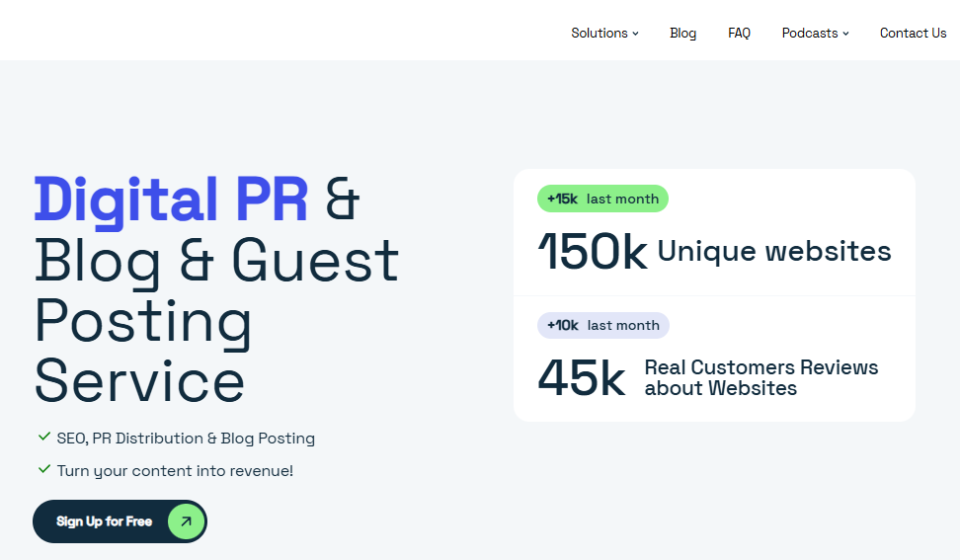
If you’ve spent any time buying backlinks or running guest post campaigns, you’ve almost certainly come across Adsy. It shows up in nearly every “best guest posting platform” roundup, it carries a solid track record on Trustpilot, and its pitch is simple: one dashboard, 150,000+ publisher websites, and a way to build backlinks without cold-emailing bloggers for weeks.
But most reviews of Adsy stop at the surface. They tell you it exists, they tell you it has filters, and they tell you whether the writer personally liked it. What they don’t tell you is how Adsy actually compares on pricing transparency, publisher quality control, company accountability, or whether it’s still “just” a guest posting marketplace or something bigger now.
This guide is built to close those gaps. We looked directly at Adsy’s own platform and cross-referenced independent testing and reviews to put together a complete, unfiltered picture — the good, the mediocre, and the things Adsy would probably rather you didn’t dig into too hard.
If you’re an SEO agency evaluating a new backlink vendor, a link builder trying to scale outreach, or a business owner who just wants to know “is Adsy actually worth it,” this is the resource meant to answer that in full.
What Is Adsy?
Adsy is a self-serve guest posting and link-building marketplace that connects advertisers (SEOs, marketers, business owners, agencies) with website publishers willing to sell content placements and backlinks. Instead of manually researching blogs, pitching editors, and negotiating rates one by one, Adsy centralizes the process: you search a marketplace of publisher sites, filter them by SEO metrics, place an order, and a piece of content with your backlink goes live.
Adsy was founded in 2017 and opened to the public in early 2018. The company is based in the United States (Delaware), and operates primarily as a marketplace model, meaning Adsy itself doesn’t own most of the publisher sites listed — it acts as the middleman, verifying inventory, processing payments, and handling delivery and disputes.
Over time, Adsy has quietly expanded well beyond “buy a guest post.” It now positions itself as a broader digital marketing and PR services provider, layering on things like link insertions, digital PR, content strategy, CRO, and email marketing on top of the core marketplace. That expansion is one of the most under-reported aspects of Adsy in most existing reviews — more on that shortly.
Quick Facts About Adsy
- Founded: 2017 (publicly launched 2018)
- Headquarters: Delaware, USA
- Publisher network: 150,000+ websites (up from roughly 90,000 in earlier years, indicating active growth)
- Core model: Self-serve marketplace + optional managed services
- Primary use case: Guest posting, link building, digital PR, SEO content placement
- Target users: SEO agencies, freelance link builders, in-house marketers, small business owners, affiliate marketers, PR professionals
How Adsy Works: The Actual Workflow
Understanding how Adsy functions day-to-day matters more than a features list, because the workflow is where you’ll actually feel friction or convenience. Here’s the process from account creation to a live backlink.
Step 1: Create an Account
Sign-up is quick — you can register with a Google account, Facebook account, or email. There’s no lengthy approval process for advertisers, which is a deliberate design choice to reduce friction and get people into the marketplace fast.
Step 2: Browse or Filter the Marketplace
Once inside, you land on a searchable database of publisher websites. This is where Adsy’s filtering system does the heavy lifting — you can narrow sites by:
- Domain Authority (Moz)
- Domain Rating (Ahrefs)
- Semrush Authority Score
- Organic traffic (Ahrefs and Similarweb estimates)
- Traffic trend (growing, stable, declining)
- Target country of traffic
- Content language
- Topical category/niche
- Price range
- Turnaround time
- Link type (dofollow/nofollow, where disclosed)
That’s more than 20 filtering dimensions in total, which is genuinely more granular than most competing marketplaces offer out of the box.
Step 3: Build a Site List or Order Directly
You can either place individual orders on sites you like, or build a custom shortlist to revisit later — useful if you’re planning a multi-month campaign and want to lock in specific domains ahead of time.
Step 4: Submit Content or Request It Be Written
Depending on the publisher’s requirements, you can either submit your own article (with your backlink and anchor text already placed) or pay for Adsy/the publisher to write the content for you.
Step 5: Publisher Review and Publication
The site owner reviews the submitted content against their editorial guidelines. If approved, it’s published within the promised turnaround window (this varies significantly site to site — anywhere from a few days to a few weeks).
Step 6: Post-Publication Monitoring
This is one of Adsy’s more genuinely useful features: the platform automatically monitors published links after they go live and flags you if a link is removed, changed to nofollow, or otherwise altered. Very few competitors offer this natively — it’s usually something advertisers have to track manually with third-party tools.
Step 7: Dispute Resolution and Refunds
If a publisher fails to deliver, delivers late, or delivers something that doesn’t match the listing (e.g., link removed shortly after publishing), Adsy’s support team acts as an intermediary. Independent testers report that Adsy generally sides fairly with advertisers on legitimate complaints and will issue credit or refunds case by case — though this isn’t a formal, published policy, which we’ll come back to in the “cons” section.
The Full Range of Adsy’s Services (Not Just Guest Posting)
This is the single biggest content gap in most existing Adsy reviews and roundups: they treat Adsy purely as a guest-posting tool, when in reality the company has built out a much wider service catalog. If you’re only evaluating Adsy on “can I buy a guest post here,” you’re evaluating maybe half the platform.
Here’s the complete breakdown of what Adsy actually offers today:
1. Guest Posting / Content Placement
The core, original product. You pay to have a new article — either self-written or Adsy/publisher-written — published on a third-party site with your link embedded.
2. Link Insertion (Niche Edits)
Rather than publishing brand-new content, this service adds your backlink into an already-published, already-indexed article on a relevant site. Link insertions are often considered more “natural” from an SEO risk perspective because the host page already has link equity and isn’t obviously a fresh, sponsored placement.
3. Digital PR and Media Coverage
Adsy offers services aimed at getting brand mentions and coverage on higher-authority media and news-style sites — a step up from typical guest-post blogs, aimed at brand visibility as much as raw SEO value.
4. Content Strategy Development
Beyond individual placements, Adsy offers planning services to help build out a broader content marketing roadmap — useful for businesses that know they need “more content” but don’t have an internal strategist.
5. PR and Marketing Consulting
A more hands-on advisory layer, aimed at businesses that want guidance on integrating link building and PR into a wider marketing plan rather than treating it as an isolated task.
6. Email Marketing Campaign Setup
A service offering that has essentially nothing to do with backlinks — it signals Adsy is trying to become a one-stop marketing shop rather than a single-purpose link marketplace.
7. SEO Optimization and Website Promotion
General on-site and off-site SEO services, positioned as a companion to the link-building side of the business.
8. Conversion Rate Optimization (CRO)
Services aimed at improving what happens after traffic arrives — landing page and funnel optimization, rather than just driving links and rankings.
9. Managed Services
For advertisers who don’t want to run their own campaigns inside the marketplace, Adsy offers a “done-for-you” option where their team handles site selection, outreach, and campaign management on your behalf.
10. API Access
Built specifically for agencies and larger operations that want to integrate Adsy’s inventory and ordering system directly into their own internal tools rather than using the web dashboard manually.
11. Referral / Affiliate Program
Users can earn commissions by referring new advertisers or publishers to the platform — a fairly standard growth mechanism, but worth knowing about if you’re already recommending tools to clients or peers.
Why this matters: if you’re an agency evaluating Adsy purely as “another guest post vendor,” you’re missing that it can realistically function as a secondary vendor for digital PR, CRO, and even email marketing — which could reduce the number of separate tools/vendors you need to manage. Whether that breadth is executed at a genuinely competitive level compared to specialists in each category is a separate question — one Adsy’s own marketing understandably doesn’t dwell on.
Adsy’s Standout Features (What Actually Makes It Reliable)
Marketplaces live or die on trust and usability. Here’s what Adsy does well enough to matter.
Deep, Granular Filtering
Most competing marketplaces let you filter by DA and price and call it a day. Adsy’s 20+ filter dimensions — including traffic trend, not just a snapshot, and country-specific traffic breakdowns — let you build a genuinely targeted shortlist instead of sorting through junk manually.
Post-Publication Link Monitoring
As mentioned above, Adsy actively tracks whether your published links stay live, stay dofollow, and stay unchanged. This is a real differentiator. A huge, quietly common problem in guest posting is publishers deleting or de-indexing sponsored content months later once they’ve been paid — Adsy’s monitoring at least gives you visibility into that instead of finding out by accident during a backlink audit.
Saved Searches and Inventory Alerts
You can save custom filter combinations and get notified via email or WhatsApp when new sites matching your criteria are added. For agencies running recurring campaigns for multiple clients with different niches, this cuts down on repetitive manual searching.
Transparent(-ish) Traffic Data
Adsy cross-references traffic estimates from multiple sources (Ahrefs, Similarweb) rather than relying on a single, easily-gamed metric. Independent testing has found the displayed numbers generally align with what third-party tools show — a meaningful trust signal, since inflated or fake traffic numbers are a common problem on smaller marketplaces.
Broad Niche Coverage
With 40+ dedicated niche landing pages — finance, legal, health, SaaS, real estate, travel, and more — Adsy has clearly built out publisher relationships across a wide spread of industries rather than concentrating in one or two easy categories (a common shortcut for smaller competitors).
Responsive Customer Support
Multiple independent reviews highlight fast, substantive responses from Adsy’s support team, including a documented case where a negative public review was resolved and subsequently updated by the reviewer after Adsy fixed the underlying issue. That’s a meaningfully strong signal — companies that only respond to public complaints reactively (rather than resolving the actual root cause) rarely get their critics to reverse course.
Established Track Record
Seven-plus years of continuous operation in a space where marketplaces frequently shut down, get acquired, or quietly disappear is not nothing. Longevity alone doesn’t guarantee quality, but it does rule out a lot of the “here today, gone with your money tomorrow” risk that smaller, newer platforms carry.
Multiple Payment and Login Options
Simple, but worth noting: fast sign-up via Google/Facebook, and major card support at checkout, reduces onboarding friction — especially relevant for agencies onboarding multiple team members or clients.
Where Adsy Falls Short: Honest Cons and Limitations
No platform is without weaknesses, and treating Adsy uncritically would do you a disservice. Here’s what to actually watch out for.
1. Pricing Is Not Publicly Transparent
This is arguably Adsy’s biggest structural weakness. Unlike some competitors that publish flat rate cards or at least give ballpark ranges on their marketing pages, Adsy’s actual per-site pricing is only visible once you’re inside the dashboard, browsing individual listings. That means:
- You can’t easily comparison-shop against competitors before committing to sign-up.
- Budget planning for larger campaigns requires manual, listing-by-listing research rather than quick top-down estimation.
- Agencies quoting client budgets have to do more upfront legwork than they would with a platform that publishes clear pricing tiers.
This isn’t necessarily a red flag on its own — marketplace pricing that varies by publisher inventory is genuinely hard to summarize in a single number — but the lack of even indicative pricing ranges on the marketing site is a real usability gap compared to more transparent competitors.
2. Founder and Company Transparency Is Weak
Independent reviewers have specifically noted that Adsy doesn’t publicly name its founders or leadership team in an easily discoverable way. In at least one documented case — detailed directly by the reviewer in Xamsor’s Adsy review — someone identifying as connected to Adsy’s founding team reportedly asked the reviewer to remove personal/identifying information from a published review.
For context: this doesn’t mean Adsy is untrustworthy — plenty of legitimate SaaS and marketplace businesses keep a low leadership profile. But for buyers (especially agencies vetting a vendor on behalf of clients) who weigh “who exactly am I doing business with” as part of due diligence, this is a legitimate gap, not a minor nitpick. Compare this to platforms that prominently feature founder bios, LinkedIn profiles, and company history — Adsy simply offers less to go on here.
3. Inconsistent Publisher Inventory Quality
With 150,000+ listed sites, quality control at scale is genuinely difficult, and it shows. While Adsy’s filters help you avoid the worst offenders, independent testing and user reports consistently mention that:
- Some listed sites have weak or borderline-fake traffic despite passing basic metric filters.
- Content quality on the publisher side varies significantly — some sites maintain solid editorial standards, others clearly exist mainly to sell placements.
- Advertisers still need to manually vet individual sites (checking real content quality, look at their existing published guest posts, checking for obvious PBN patterns) rather than trusting the marketplace’s metrics-only filtering completely.
In short: the filters narrow the field, but they don’t replace manual due diligence. Treating Adsy as a “filter and blindly buy” tool is a mistake that will eventually get you a wasted placement or two.
4. Country-Level Traffic Filtering Isn’t Fully Reliable
Adsy lets you filter sites by “traffic from country X,” which sounds precise — but independent testing has found this filter doesn’t always guarantee the majority of a site’s traffic actually originates from the selected country. This matters a lot if you’re running geo-targeted campaigns (e.g., a UK-focused business wanting UK-audience publishers) — you may need to double-check actual traffic geography with Ahrefs/Similarweb yourself rather than trusting the filter at face value.
5. No Clearly Published Refund or Satisfaction Guarantee
While Adsy’s support team appears to handle disputes reasonably on a case-by-case basis (per independent reviewer accounts), there’s no clearly published, formal refund policy or satisfaction guarantee prominently displayed on the site. That ambiguity means you’re relying on Adsy’s discretion and support responsiveness rather than a documented contractual guarantee — fine when things go well, less comfortable if you’re a larger agency needing predictable, documented vendor terms for client contracts.
6. Turnaround Times Vary Widely and Aren’t Always Predictable Upfront
Delivery windows depend entirely on individual publishers, and while listings usually show an estimated turnaround, actual delivery can slip — which is a common industry-wide issue with marketplace-style link building, but still worth planning around, especially for time-sensitive campaigns (product launches, PR pushes tied to a specific date).
7. Breadth of Services May Mean Less Depth in Any One Area
Adsy’s expansion into digital PR, CRO, email marketing, and content strategy is a genuine positive for convenience — but a platform built primarily around a link-building marketplace may not match the depth of a specialist CRO agency or a dedicated email marketing platform. If you need serious, specialized expertise in those adjacent services, Adsy’s offering is likely better treated as a convenient add-on than a primary vendor choice.
What Adsy Is Missing (Based on the Available Data)
Pulling directly from the gaps above, here’s a consolidated list of what would meaningfully improve Adsy if the company addressed it:
- Public, indicative pricing tiers — even a rough “guest posts typically range from $X–$Y” would help buyers budget before signing up.
- A clearly published refund/guarantee policy, rather than case-by-case discretionary handling.
- Public leadership/founder information, to build stronger institutional trust with agencies and enterprise buyers.
- Stricter, more visible publisher vetting standards — something like a visible “quality score” or editorial standards badge per site, beyond raw traffic/DA metrics.
- More reliable country-traffic filtering, ideally cross-validated rather than self-reported by publishers.
- Guaranteed turnaround windows with penalties/compensation for missed deadlines, rather than variable, publisher-dependent timelines.
- Case studies or transparent results data for the non-core services (Digital PR, CRO, email marketing) to prove those offerings are genuinely competitive, not just bolted-on upsells.
None of these gaps are disqualifying on their own, but collectively they explain why Adsy — despite strong core functionality — hasn’t fully closed the trust gap that a smaller, boutique, high-transparency vendor might close more easily, even with a smaller inventory.
Is Adsy Legit? A Look at Authenticity and Trust Signals
For an industry that’s genuinely full of low-quality PBNs (private blog networks) and outright scam marketplaces, “is this platform legit” is a completely reasonable first question — and one worth answering directly rather than glossing over.
Signals that support legitimacy:
- Seven-plus years of continuous, public operation, per Adsy’s own company site and the founding history.
- A 4-star (“Great”) TrustScore on Trustpilot across 200+ reviews at time of writing — a large enough sample to be meaningfully harder to game than a handful of curated testimonials, though (as with any Trustpilot profile) it includes a real mix of five-star praise and one-star complaints worth reading in full rather than taking the headline score at face value.
- A visible, non-trivial number of unresolved negative reviews on Trustpilot and on smaller review sites like Sitejabber — Adsy doesn’t have a spotless record, and pretending otherwise would undercut the credibility of this review. What matters more than the existence of complaints is how they’re handled (see below).
- Independently verified traffic-data accuracy — The filtering system and publisher metrics found the displayed numbers broadly consistent with third-party tools like Similarweb, rather than obviously inflated.
- Documented, responsive dispute resolution — multiple Trustpilot reviews show Adsy’s team proactively refunding disputed orders, in one case adding a goodwill credit on top of a refund and asking the customer to reconsider their rating — a pattern that shows up repeatedly rather than as an isolated incident.
- A ScamAdviser assessment noting a long-registered domain, valid SSL, and use of an external, non-removable third-party review system — all standard positive trust indicators for an operating business rather than a scam shell.
- A real, ongoing pattern of product expansion (growing inventory from roughly 90,000 to 150,000+ publisher sites, per Xamsor’s founding-story reporting) — consistent with an operating business investing in growth, not a static or declining scheme.
Signals that warrant caution:
- Anonymous/low-visibility founders and leadership — directly documented in Xamsor’s review, where a reviewer describes a founder requesting personal information be removed from the published review.
- No formal, published refund policy — refunds appear to happen consistently in practice (per Trustpilot responses from Adsy’s team) but aren’t guaranteed in writing anywhere on the public site.
- Inconsistent quality at the long tail of publisher inventory — a recurring theme across multiple Trustpilot reviews, including complaints about publishers removing links after payment or rejecting accepted orders.
- Pricing opacity that limits pre-signup due diligence.
Bottom line on authenticity: Adsy reads as a legitimate, operating business with real customers, real support infrastructure, and reasonably accurate data — not a scam or a fly-by-night operation. But “legitimate” and “fully transparent” aren’t the same thing, and Adsy sits closer to the former than the latter. Treat it the way you’d treat any marketplace vendor: verify individual listings yourself, keep records of what was promised versus delivered, and don’t assume the platform’s own filters are a substitute for your own judgment.
Adsy vs. the Broader Link-Building Landscape
To put Adsy’s strengths and weaknesses in context, it helps to understand where it sits relative to the general categories of link-building vendors an SEO agency or business owner might be choosing between.
Marketplace Platforms (Adsy’s Category)
These are large, self-serve inventories where you filter and buy directly. The trade-off is always the same: scale and convenience versus consistency. Adsy sits comfortably mid-to-upper tier here — its filtering depth and monitoring feature put it ahead of smaller, less-developed marketplaces, but its long-tail inventory quality issues are a shared weakness across this entire category, not unique to Adsy specifically.
Boutique Link-Building Agencies
Smaller agencies that hand-vet a curated list of sites, often with existing editor relationships built over years. These tend to offer more consistent quality and more accountability (a real account manager, not just a support ticket queue) but at higher per-link cost and lower volume. If your priority is a handful of extremely high-quality placements rather than scale, this category often outperforms marketplaces like Adsy.
Manual Outreach (In-House or Freelance)
Doing it yourself or hiring a dedicated outreach specialist gives maximum control and, in theory, the best quality-to-cost ratio — but it’s slow, and results depend entirely on the skill of whoever’s doing the outreach. This isn’t really a competitor to Adsy so much as an alternative resourcing model, and many agencies use both: manual outreach for high-priority target sites, marketplaces like Adsy for volume and speed.
PBNs and Low-Quality Link Networks
Worth mentioning only to draw the contrast: Adsy is not this. Its emphasis on real traffic verification, editorial review by actual site owners, and post-publication monitoring puts it in a fundamentally different risk category than private blog networks, which are built purely to manipulate rankings and carry real penalty risk. If you’ve been offered suspiciously cheap, suspiciously fast link packages elsewhere, Adsy’s more metrics-verified, publisher-reviewed model is a meaningfully safer category of product.
Where Adsy really differentiates itself from all three categories above is the sheer combination of scale and feature depth — most marketplaces that reach Adsy’s inventory size don’t also offer granular traffic-trend filtering or automated post-publication monitoring, and most platforms that offer those features don’t have anywhere near 150,000 sites in inventory. That combination is Adsy’s actual competitive moat, even if it’s rarely articulated that clearly in existing reviews.
A Deeper Look: Content Quality Control on Adsy
One area that deserves more scrutiny than most reviews give it is exactly how content quality is controlled once you’re inside the marketplace, because this directly affects whether your backlink campaign actually moves rankings or just becomes a wasted expense.
Editorial Review Process
Each publisher site sets its own editorial guidelines — word count minimums, topic restrictions, anchor text rules, number of outbound links allowed, and so on. Adsy surfaces these guidelines at the listing level, which is helpful, but enforcement is ultimately up to the individual publisher, not Adsy centrally. This means the consistency of editorial standards varies as much as the sites themselves.
Who Writes the Content
Advertisers have two paths: submit pre-written content, or pay extra for content to be written on their behalf (either by Adsy’s writing team or the publisher). If you choose to have Adsy or the publisher write for you, quality can vary — some placements read as genuinely useful, on-topic articles; others read as fairly generic, SEO-first filler built primarily to house a link. If content quality genuinely matters to your brand (not just the backlink’s SEO value), reviewing writing samples before committing to publisher-written content is worth the extra step.
Anchor Text and Link Placement Control
Adsy generally allows advertisers reasonable control over anchor text and link placement within the approved content, which matters for SEO practitioners trying to maintain a natural anchor text profile rather than over-optimizing with exact-match anchors — a mistake that can trigger algorithmic scrutiny.
The Practical Takeaway
Content quality control on Adsy is real, but it’s distributed rather than centralized — each publisher enforces their own bar. That’s structurally different from, say, a boutique agency that applies one consistent quality standard across every placement they sell. Neither approach is inherently better, but it’s an important distinction for anyone assuming “Adsy” as a brand guarantees uniform content quality across its entire 150,000-site network. It doesn’t — and no marketplace at that scale realistically could.
Understanding Adsy’s Pricing Model (Even Without Published Rates)
Since Adsy doesn’t publish a fixed rate card, it’s worth explaining how pricing actually works once you’re inside the platform, so you’re not going in completely blind.
Pricing is set per publisher, not per platform. Each site owner sets their own price for a placement, and Adsy’s marketplace displays that price directly on the listing alongside the site’s metrics. This means pricing naturally correlates with authority and traffic — higher DA/DR sites with strong organic traffic command significantly higher prices, while smaller or niche sites are considerably cheaper.
Additional costs stack on top of the base placement fee. If you need content written for you rather than submitting your own, that’s typically an added cost on top of the placement fee itself. Link insertions are generally priced lower than full guest posts, reflecting the lower editorial and hosting effort involved.
Bulk or recurring campaigns may have room for negotiation, particularly through the managed services option, where Adsy’s team handles sourcing on your behalf — though specific bulk discount structures aren’t transparently published either, meaning this is something to raise directly with support rather than something you can calculate independently in advance.
Budgeting takeaway: rather than expecting a simple “$X per post” answer, agencies and business owners should budget for a range, and expect actual per-placement costs to vary significantly based on which tier of publisher authority they’re targeting. This is standard for marketplace-model link building generally, but it’s worth stating plainly since Adsy’s own marketing materials don’t spell it out clearly upfront.
Who Should Choose Adsy
Based on everything above, Adsy is a strong fit for:
SEO Agencies managing multiple client campaigns who need a large, filterable inventory in one place instead of running manual outreach for every single client niche. The saved-search and alert features specifically help here.
Freelance Link Builders who want to scale beyond personal outreach relationships without hiring a team, and who value the post-publication monitoring feature to protect the links they’ve already sold to clients.
Business Owners and In-House Marketers who need occasional guest posts or link insertions but don’t have the bandwidth (or desire) to build outreach relationships from scratch.
Agencies Wanting a Secondary Vendor for Adjacent Services — teams that already have a primary SEO/link-building process but want a convenient option for occasional digital PR pushes or CRO consulting without onboarding a whole new specialist vendor.
Developers/Agencies Wanting API Integration — if you’re building or maintaining your own internal tools and want programmatic access to a large publisher inventory, Adsy’s API is a genuine differentiator most competitors don’t offer.
Who Should Probably Look Elsewhere
Adsy isn’t the right fit for everyone:
Buyers Who Need Full Pricing Transparency Upfront — if your procurement or client-approval process requires clear published rates before you can even create an account, Adsy’s dashboard-only pricing will be a friction point.
Buyers Who Prioritize Company Transparency — if knowing exactly who owns and runs a vendor is a hard requirement (common in enterprise procurement or regulated industries), Adsy’s low leadership visibility may be disqualifying.
Advertisers Who Want Boutique, Hand-Vetted Inventory Only — if you’ve been burned before by inconsistent marketplace quality and specifically want a smaller, rigorously curated list of premium sites rather than a 150,000-site ocean requiring your own vetting, a smaller boutique agency may serve you better.
Teams Needing Guaranteed, Contractual SLAs — without a formal published refund/guarantee policy, larger organizations that require documented vendor SLAs for client-facing contracts may find Adsy’s case-by-case approach insufficient for their compliance needs.
How to Get the Best Results From Adsy (Practical Tips)
If you decide to move forward, here’s how to sidestep most of the weaknesses covered above:
- Don’t trust filters blindly. Manually open a handful of a publisher’s existing guest posts before ordering. Check if the content reads naturally, whether the site has an active audience (comments, social shares, recent posts), and whether previous sponsored content is still live.
- Cross-check traffic and country data independently. Run shortlisted sites through your own Ahrefs or Similarweb account before committing, especially for geo-targeted campaigns.
- Start with a small test order before scaling. Before committing budget to a bulk campaign, order from 2–3 sites first to evaluate actual turnaround time, communication, and content quality.
- Use the link monitoring feature actively. Don’t just set it and forget it — check in periodically and follow up promptly if a link is flagged as removed or altered.
- Document everything for dispute purposes. Since there’s no formal published refund policy, keep screenshots of listing promises (traffic, turnaround, link type) so you have clear evidence if you need to escalate a dispute with support.
- Treat the non-core services (CRO, email marketing, PR) as a convenience, not your primary vendor, unless you’ve specifically reviewed case studies or results for those specific offerings.
Adsy Frequently Asked Questions
Is Adsy legit or a scam? Based on independent review data, seven-plus years of operation, verified traffic accuracy, and a large base of positive third-party reviews, Adsy appears to be a legitimate operating marketplace rather than a scam. That said, individual publisher listings within the marketplace still vary in quality, so due diligence per-site is still recommended.
How much does Adsy cost? Adsy doesn’t publish fixed pricing tiers publicly — costs vary per publisher site and are visible once you’re browsing the dashboard. Expect pricing to scale with a site’s authority metrics and traffic.
Does Adsy guarantee my backlink stays live? Adsy actively monitors published links and will flag you if a link is removed or altered after publication, but there’s no clearly published formal guarantee or automatic compensation policy — disputes appear to be handled case by case through customer support.
Is Adsy only for guest posting? No — this is one of the most commonly missed facts about the platform. Adsy also offers link insertions, digital PR, content strategy development, SEO consulting, CRO, email marketing setup, managed campaign services, and API access for agencies.
How many websites does Adsy have in its network? Adsy’s publisher network has grown to over 150,000 websites, up from roughly 90,000 in earlier years — indicating active, ongoing expansion.
Who owns or runs Adsy? Adsy’s founders and leadership team are not prominently publicized on the company’s marketing site, which is a notable transparency gap compared to some competitors that showcase founder bios and company history more openly.
Is Adsy good for SEO agencies specifically? Yes, with the caveat that agencies should use Adsy as one vendor within a broader vetting process rather than relying solely on its filters. The saved-search, alert, and API features specifically benefit agencies managing recurring or multi-client campaigns.
What’s the alternative to Adsy? Depending on your priorities, alternatives range from smaller boutique link-building agencies (better for hand-vetted quality but smaller inventory) to other large marketplaces (comparable scale, different pricing/transparency trade-offs). The right choice depends on whether you prioritize inventory size, pricing transparency, or company transparency more heavily.
Final Verdict: Adsy Rating Breakdown
| Category | Rating (out of 10) | Notes |
|---|---|---|
| Inventory size & filtering | 9/10 | Genuinely deep filtering, large network |
| Data accuracy | 8/10 | Traffic figures broadly verified as accurate |
| Pricing transparency | 5/10 | No public pricing, dashboard-only |
| Company transparency | 5/10 | Founders/leadership not publicly visible |
| Publisher quality consistency | 6.5/10 | Strong at the top, weak at the long tail |
| Customer support | 8.5/10 | Responsive, resolves disputes fairly |
| Breadth of services | 8/10 | Genuinely expanded beyond guest posting |
| Trust & legitimacy signals | 8/10 | Strong third-party review presence, established history |
Overall Adsy Rating: 7.5/10
Adsy earns a solid, above-average score. It’s a legitimate, established marketplace with real strengths in filtering depth, data accuracy, support responsiveness, and service breadth that most reviews don’t even mention. Where it loses points is consistent: transparency — around pricing, around leadership, and around formal guarantees. None of these gaps make Adsy untrustworthy, but they do mean the burden of due diligence stays on the advertiser rather than being fully handled by the platform.
For SEO agencies, link builders, and business owners willing to do a bit of their own vetting on top of Adsy’s filters, it’s a genuinely useful, time-saving tool. For buyers who need full transparency and formal guarantees before signing up, it’s worth going in with clear eyes about what Adsy does and doesn’t disclose upfront.
This analysis is based on a direct review of Adsy’s platform combined with independent third-party testing and review data, intended to give SEO professionals and business owners a complete, balanced picture beyond standard marketing-page claims.
Sources & References
This review draws directly on the following primary and independent sources:
- Adsy — Official Website. https://adsy.com/ — used for service listings, platform positioning, and feature descriptions.
- Xamsor — “Adsy Review (2026).” https://xamsor.com/blog/adsy-review/ — independent hands-on testing of Adsy’s filters, publisher metrics, founding history, and the documented founder-transparency incident referenced above.
- Trustpilot — Adsy.com Customer Reviews. https://www.trustpilot.com/review/adsy.com — primary source for the platform’s TrustScore, review volume, and real examples of both praise and complaints, including Adsy’s own support-team responses to disputes.
- Sitejabber — Adsy Reviews. https://www.sitejabber.com/reviews/adsy.com — additional independent user feedback, used for balance against Trustpilot data.
- ScamAdviser — adsy.com Website Trust Check. https://www.scamadviser.com/check-website/adsy.com — domain age, SSL, and general trust-signal verification.
Where claims in this article rely on a specific source, that source is linked inline. General platform features and workflow descriptions are based on direct review of Adsy’s own site; all quality, trust, and reliability claims are cross-checked against the independent sources above rather than taken solely from Adsy’s own marketing.